

Perinatal mental health and relationships matter during pregnancy and early parenthood. For many people this season brings joy and deep meaning — and it can also bring emotional strain and changes in how partners relate to one another. This article offers a grounded look at how these changes commonly show up, practical steps to try, signs that extra support may help, and how counselling and allied therapies fit into care in Westboro and Ottawa.
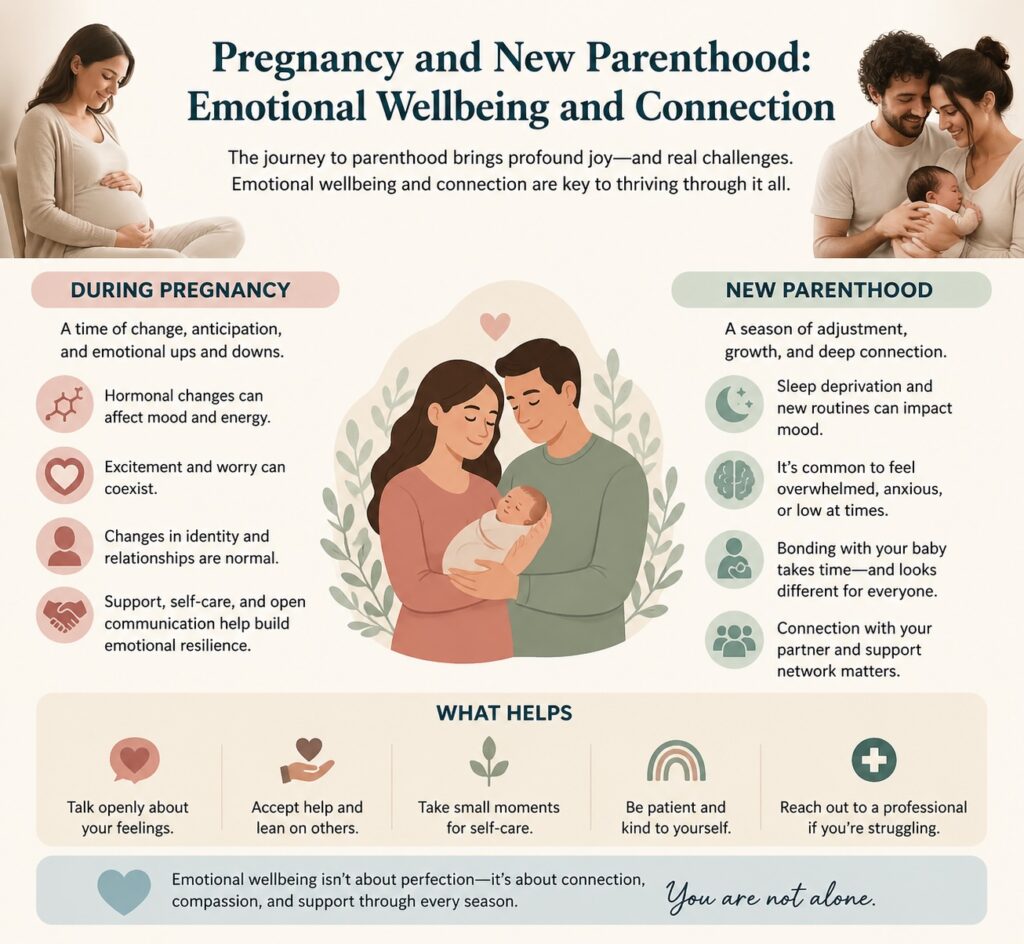
How pregnancy and new parenthood affect emotional wellbeing and connection
Pregnancy and the postpartum months involve biological changes (hormonal shifts, sleep disruption, physical recovery) alongside big life transitions: less free time, changed work rhythms, and a new caregiving routine. These things interact with emotions and can change mood, patience, and how partners read each other’s needs.
People often describe feeling more anxious, unexpectedly low, or irritable. Others notice a sense of losing part of their pre‑parent identity. For some, a baby deepens closeness; for others, it can create distance. Physical and emotional intimacy change — and the small habits that once connected you may no longer fit a new schedule.
Perinatal Mental Health: Common relationship stressors after having a child
Every family is different, but these stressors frequently come up in perinatal counselling:
- Communication strain: Shorter conversations and frequent interruptions make it harder to talk about feelings and logistics.
- Exhaustion and sleep loss: Tiredness reduces emotional bandwidth and makes conflict harder to manage.
- Role and identity shifts: Changes in who does what at home, plus shifts in work and personal time.
- Changes in physical intimacy: Recovery after birth, breastfeeding, body changes, or fatigue can affect desire and comfort with closeness.
- Different parenting approaches: Disagreements about routines, feeding, or soothing can become recurring tensions.
Practical steps you can try right now
Small, consistent changes often help more than big gestures. These ideas are practical for busy parents and can be adapted to different family structures.
- Five‑minute daily check‑in: Each evening, name one thing that went well and one simple need for tomorrow. Keep it short and non‑judgmental.
- Divide simple tasks: Make a shared list (meals, diapers, calls) and rotate responsibilities to reduce assumptions.
- Protect micro‑rest: Swap short naps or agree that one person takes an early feed so the other can sleep when possible.
- Define micro‑intimacy: Reframe closeness to include a hug, a five‑minute walk, or sitting together while someone else cares for the baby.
- Use time‑bound conversations: If a topic feels heated, agree to a 20‑minute window later when both are less tired and more able to listen.
How partners can support each other
Support is often practical rather than perfect. Partners can try to:
- Ask open questions (“How are you doing? What would help?”) rather than assuming needs.
- Offer specific help: “I can take the next diaper change” is easier to accept than “Do you want help?”
- Notice and name stress without assigning blame: “I’m noticing we’re both more tired and snapping more.”
- Keep compassionate language: validate feelings even when you can’t fix them immediately.
Signs that additional support may help
Many bumps in this season ease with time and small adjustments. Consider reaching out for counselling or other supports if you notice:
- Persistent sadness, anxiety, or numbness that lasts several weeks and affects daily life.
- Frequent or escalating arguments, or a pattern where one partner routinely withdraws to avoid conflict.
- Ongoing distress about changes in intimacy or emotional closeness that doesn’t improve.
- Significant problems with sleep, concentration, appetite, or self‑care beyond what you’d expect with a newborn.
- Intrusive or persistent thoughts about harming yourself or your baby.
If you have any thoughts about harming yourself or someone else, or feel you might act on those thoughts, please seek immediate help: call 911 or go to your nearest emergency department. In Canada, you can also call or text 988 to connect with the Canada Suicide Prevention Service.
Perinatal Mental Health: How counselling can help — what to expect
Counselling offers a confidential space to explore feelings and patterns that are hard to handle at home. Perinatal‑informed therapists work with individuals or couples to:
- Improve practical communication and reduce cycles of blaming or withdrawing.
- Create realistic plans for sharing tasks, rest, and supports so expectations are clearer.
- Explore identity shifts and grief about how life used to be, in a way that validates both partners.
- Address anxiety, low mood, or overwhelming worry with evidence‑informed skills and emotional support.
Therapy can be skill‑based (communication tools, behavioural plans) and emotionally supportive. Some people find a brief course of sessions (6–8) helps them get unstuck; others prefer longer work. Counselling does not replace emergency medical care when that is needed, but it can make daily life feel more manageable and reduce relationship friction.
Complementary care: massage therapy and chiropractic support
Physical pain, pelvic discomfort, and muscle tension are common in pregnancy and postpartum and can worsen sleep and mood. Massage therapy can ease muscle tension and promote relaxation. Chiropractic care may help with certain types of back or pelvic discomfort for some people. These therapies can complement counselling by addressing the body’s role in emotional wellbeing; they are not substitutes for mental health care when that is required.
Quick comparison: Which support might help?
| Concern | May help | What to expect |
|---|---|---|
| Feeling overwhelmed, anxious or low | Counselling | Talk through feelings, learn coping skills, and get short‑ or long‑term support. |
| Muscle tension, poor sleep from discomfort | Massage therapy | Hands‑on relaxation and reduced tension; often immediate calming effects. |
| Back or pelvic pain affecting daily tasks | Chiropractic care | Assessment and targeted care for mobility and pain; combined with exercises. |
Finding the right support
When choosing a counsellor or allied practitioner, these practical steps can help:
- Look for clinicians who list perinatal experience or training on their profiles.
- Ask whether they work with individuals, couples, or both, and how they structure sessions for busy parents.
- Consider short‑term options, flexible hours, or virtual appointments if scheduling or finances are a concern.
- Check whether your benefits cover counselling, massage therapy, or chiropractic care and whether referrals are needed.
Our clinic offers perinatal‑informed counselling in Ottawa and across Ontario and can help coordinate massage therapy or chiropractic appointments for those that live locally, if needed. If you’d like to meet a therapist first, browsing clinician profiles and asking about perinatal experience is a good first step.
Perinatal Mental Health: Gentle reassurance
Struggling during pregnancy or after a baby arrives is common — it doesn’t mean you or your partner have failed. This season asks a lot of any relationship. Reaching out for support is a practical step many families take. Help can reduce isolation, improve communication, and create clearer routines so daily life feels more manageable.
Ready to talk? If you live in Ottawa or anywhere in Ontario and would like to explore counselling, our team offers perinatal‑informed appointments for individuals and couples. We can also help coordinate massage therapy or chiropractic appointments for those that live near the clinic where appropriate, so you get holistic support that fits your needs. Please reach out to book a visit or to ask about virtual options.
Note: This article is informational and not a substitute for medical or emergency care. For urgent medical concerns related to pregnancy or postpartum health, contact your healthcare provider or emergency services.